<?xml version="1.0" encoding="iso-8859-1"?>
<?xml-stylesheet  type="text/xsl" href="pmathml.xsl"?>
<html xmlns="http://www.w3.org/1999/xhtml" xmlns:m="http://www.w3.org/1998/Math/MathML" xml:space="preserve">


<head>
<title>Introduction to OpenMath</title>
<style>

body {
margin-left: 1em;
margin-right: 1em;
}

div.mdata {
margin-top: .5em;
margin-bottom: .5em;
margin-left: 5em;
}

span.mdatahead {
font-weight: bold;
}

div.minitoc {
border-width: thin;
border-style: solid;
border-color: blue;
font-size: 90%;
margin-top: 1em;
margin-bottom: 1em;
padding: 1em 1em 1em 1em;
}

p {text-align:justify;	   
  }
code {font-size: 125%;
      font-family: monospace; 
     }
.figure {
border-width:thin;
border-style: solid;
border-color: black;
margin: 0.5em 0.5em 0.5em 0.5em;
padding: 0.5em 0.5em 0.5em 0.5em;
}

div.caption {
margin-top: 1em;
}

.footnote{
font-size: 75%;
font-style: italic;
}
.delliteral {
font-size: 75%;
background-color: #efefef;
border-color: black;
border-style: solid;
border-width: 1px;
padding: 1em;
color: red;
text-decoration: line-through;
}
.newliteral {
font-size: 75%;
background-color: #efefef;
border-color: black;
border-style: solid;
border-width: 1px;
padding: 1em;
color: green;
}
.literal {
font-size: 75%;
background-color: #efefef;
border-color: black;
border-style: solid;
border-width: 1px;
padding: 1em;
margin:bottom: 1em;
}
.del {
color: red;
text-decoration: line-through;
}
.new {
color: green;
}
.chg {
color: blue;
}
.changetoc {
border-style: solid;
border-color: black;
border-width: 1px;
margin: 2em 2em 2em 2em;
background-color: yellow;
}

.lowerroman {
list-style-type: lower-roman;
}
</style>
</head>
<body>
  <div class="minitoc"><a href="omstd20html-0.xml">OpenMath 2</a> <a href="omstd20html-0.xml#toc">Table of Contents</a><br/><br/><a href="#cha_int">This: 1 Introduction to <i>OpenMath</i></a><br/>
    <a href="omstd20html-1.xml#sec_om-arch">1.1 <i>OpenMath</i> Architecture</a><br/>
    <a href="omstd20html-1.xml#sec_intro-obj">1.2 <i>OpenMath</i> Objects and Encodings</a><br/>
    <a href="omstd20html-1.xml#sec_intro-cd">1.3 Content Dictionaries</a><br/>
    <a href="omstd20html-1.xml#sec_addnfiles">1.4 Additional Files</a><br/>
    <a href="omstd20html-1.xml#sec_phrasebooks">1.5 Phrasebooks</a><br/><a href="omstd20html-2.xml">Next: 2 <i>OpenMath</i> Objects</a><br/></div>
  <div><h1 name="cha_int" id="cha_int">
  Chapter 1<br/>Introduction to <i>OpenMath</i></h1>


<p>This chapter briefly introduces <i>OpenMath</i> concepts and notions that are
referred to in the rest of this document.</p>

<div><h2 name="sec_om-arch" id="sec_om-arch">1.1 <i>OpenMath</i> Architecture</h2>


<div class="figure"><a name="fig_om" id="fig_om"/>
    
    <img src="om-arch.png" alt="om-arch.png"/>
<div class="caption">
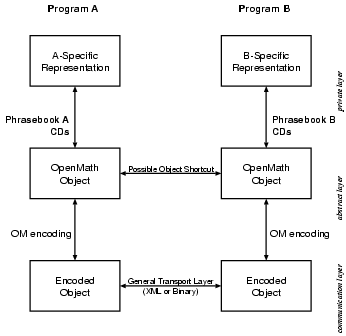
  Figure 1.1 The <i>OpenMath</i> Architecture</div></div>

<p>The architecture of <i>OpenMath</i> is described in <a href="omstd20html-1.xml#fig_om">Figure 1.1</a> and summarizes the interactions among the different
<i>OpenMath</i> components.  There are three layers of representation of a
mathematical object . The first is
a  private layer that
is the internal representation used by an application.  The second is
an abstract layer that is the representation as an <i>OpenMath</i> object.
<span>Note that these
two layers may, in some cases, be the same.</span>
The third is a
communication layer that translates the <i>OpenMath</i> object representation into
a stream of bytes. An application dependent program manipulates the
mathematical objects using its internal representation, it can convert
them to <i>OpenMath</i> objects and communicate them by using the byte stream
representation of <i>OpenMath</i> objects.</p>
</div>

<div><h2 name="sec_intro-obj" id="sec_intro-obj">1.2 <i>OpenMath</i> Objects and Encodings</h2>


<p><i>OpenMath</i> objects are representations of mathematical entities that
can be communicated among various software applications in a
meaningful way, that is, preserving their
<span>"semantics"</span>.</p>

<p><i>OpenMath</i> objects and encodings are described in detail in <a href="omstd20html-2.xml#cha_obj">Chapter 2</a> and <a href="omstd20html-3.xml#cha_enco">Chapter 3</a>.</p>


<p>The standard endorses two encodings in <acronym>XML</acronym> and binary
formats.
<span>At the time of writing, these are the encodings
supported by most existing <i>OpenMath</i> tools and applications,</span>

however they are not the only possible encodings of <i>OpenMath</i>
objects. Users who wish to define their own encoding

<span>, are free to</span>
do so provided that there is

<span>a well-defined correspondence
between the new encoding and the abstract model defined in <a href="omstd20html-2.xml#cha_obj">Chapter 2</a>. </span>
</p>

</div>

<div><h2 name="sec_intro-cd" id="sec_intro-cd">1.3 Content Dictionaries</h2>


<p>Content Dictionaries (CDs) are used to assign informal and formal
semantics to all symbols used in the <i>OpenMath</i> objects. They define the
symbols used to represent concepts arising in a particular area of
mathematics.</p>

<p>The Content Dictionaries are public, they represent the actual
common knowledge among <i>OpenMath</i> applications.  Content Dictionaries fix
the <span>"meaning"</span> of objects independently of the
application.  The application receiving the object may then recognize
whether or not, according to the semantics of the symbols defined in
the Content Dictionaries, the object can be transformed to the
corresponding internal representation used by the application.</p>
</div>

<div><h2 name="sec_addnfiles" id="sec_addnfiles">1.4 Additional Files</h2>
 
<p>Several
additional files are related to Content Dictionaries.  Signature
<span>Dictionaries</span>
contain the signatures of symbols defined in some <i>OpenMath</i> Content
Dictionary and their format is endorsed by this standard.</p>

<p>Furthermore, the standard fixes how to define a specific
set of Content Dictionaries as a CDGroup.</p>

<p>Auxiliary files that define presentation and rendering or that
are used for manipulating and processing Content Dictionaries are not
discussed by the standard.</p>

</div>
<div><h2 name="sec_phrasebooks" id="sec_phrasebooks">1.5 Phrasebooks</h2>


<p>The conversion of an <i>OpenMath</i> object to/from the internal
representation in a software application is performed by an interface
program called a <i>Phrasebook</i>. The translation is
governed by the Content Dictionaries and the specifics of the
application. It is envisioned that a software application dealing with
a specific area of mathematics declares which Content Dictionaries it
understands. As a consequence, it is expected that the Phrasebook of
the application is able to translate <i>OpenMath</i> objects built using symbols
from these Content Dictionaries to/from the internal mathematical
objects of the application.
</p>

 <p><i>OpenMath</i> objects do not
specify any computational behaviour, they merely represent mathematical
expressions.  Part of the <i>OpenMath</i> philosophy is to leave it to the
application to decide what it does with an object once it has received
it.  <i>OpenMath</i> is not a query or programming language. Because of this,
<i>OpenMath</i> does not prescribe a way of forcing <span>"evaluation"</span> or
<span>"simplification"</span> of objects like
<m:math><m:mn>2</m:mn><m:mo>+</m:mo><m:mn>3</m:mn></m:math> or
<m:math><m:mi>sin</m:mi><m:mo>(</m:mo><m:mi>&#960;</m:mi><m:mo>)</m:mo></m:math>. Thus,
the same object <m:math><m:mn>2</m:mn><m:mo>+</m:mo><m:mn>3</m:mn></m:math> could be
transformed to <m:math><m:mn>5</m:mn></m:math> by a computer algebra system,
or displayed as <m:math><m:mn>2</m:mn><m:mo>+</m:mo><m:mn>3</m:mn></m:math> by a
typesetting tool.</p>
</div>
</div>
  <div class="minitoc"><a href="omstd20html-0.xml">OpenMath 2</a> <a href="omstd20html-0.xml#toc">Table of Contents</a><br/><br/><a href="#cha_int">This: 1 Introduction to <i>OpenMath</i></a><br/><a href="omstd20html-2.xml">Next: 2 <i>OpenMath</i> Objects</a><br/></div>
</body>
</html>